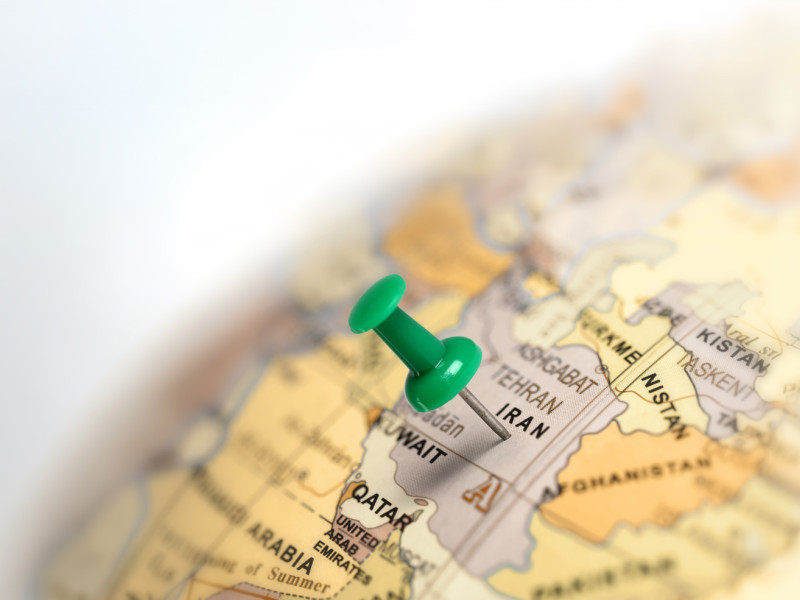
Iran Conflict
We have launched an Iran Conflict area on our website, providing consolidated updates and guidance in response to the rapidly evolving situation.
We’ve launched a new Iran Conflict layer on GlobeView, giving users a single, intuitive view of key insights on the rapidly evolving situation in the Persian Gulf.


We have launched an Iran Conflict area on our website, providing consolidated updates and guidance in response to the rapidly evolving situation.
The article considers the scope and implications of the 60 day waiver of the Jones Act’s cabotage/coastwise restrictions for a defined list of potentially covered products.
In an attempt to address rising energy prices and trade disruptions in the wake of the conflict with Iran, the U.S. approved a 60-day waiver of the Jones Act’s cabotage/coastwise restrictions for a defined list of potentially covered products. The waiver is valid for 60 days, expiring on 17 May 2026 at 11:59 p.m. ET. It is not yet clear how the waiver will work in practice, if it will have the intended effect, if it will be modified, or if it will be legally challenged.
The U.S. Jones Act is a collection of laws regulating U.S. coastwise trade and other maritime activities within U.S. waters. Under the Jones Act, with few exceptions, a vessel must be coastwise qualified to transport merchandise between ports in the U.S. Generally, coastwise qualified vessels are required to be U.S.-built, -owned, -flagged, and -crewed. While the Jones Act authorizes waivers of the coastwise restrictions by executive action, such waivers are rarely issued and have historically been limited when issued.
On 18 March 2026, the Trump Administration announced the subject 60-day waiver. The waiver was confirmed in guidance published by U.S. Customs & Border Protection (CBP) on 19 March. A copy of the CBP notice is available here. Per the CBP notice, the waiver was issued under 46 U.S.C. 501(a) which permits a waiver “to the extent the Secretary [of War, formerly of Defense] considers necessary in the interest of national defense to address an immediate adverse effect on military operations.” The White House explained in a post on X that the waiver is intended “to mitigate the short-term disruptions to the oil market … and will allow vital resources like oil, natural gas, fertilizer, and coal to flow freely to U.S. ports for sixty days ….”
The CBP notice of March 19 lays out broadly how the waiver will be implemented by CBP. The notice confirms the waiver is a limited 60-day suspension. The waiver applies only to a list of “potentially covered products.” The list is accessible in the CBP notice and identifies over 600 products mainly consisting of energy and fertilizer products. The products are identified by their Harmonized Tariff Schedule (HTS) classification.
CBP will enforce compliance of the waiver through the normal entry, manifest, and documentation procedures. CBP also requests notice via email by “any member of the trade community” who intends to transport a listed product on a foreign flag vessel in reliance on the waiver. Further, consistent with existing law, every coastwise transportation by a foreign vessel under this waiver will have to be reported to the U.S. Maritime Administration (MARAD) within ten (10) days of completion of the voyage. The report will have to include the name and flag of the vessel; the owner’s and operator’s names; the dates of the voyage; relevant ports of call; a description of the cargo; an explanation as to why the waiver was in the interest of national defense; and any other information required by MARAD.
Violations of the Jones Act coastwise restrictions can result in substantial penalties for foreign ship owners and others involved in the transportation, including a fine up to the value of the cargo carried. As such, it is important for Members contemplating trade in reliance on this waiver to ensure compliance with the waiver’s terms and reporting requirements. Moreover, it is crucial to remain alert to developments as the waiver may not remain in effect for its intended duration or scope if a legal challenge is mounted or the administration re-evaluates the purported need for the waiver. Consultation with external legal advisors is strongly encouraged for any Member contemplating trade pursuant to this waiver.
Additionally, Members may want to consider if existing or contemplated charter parties allow for trade pursuant to this waiver and/or address the financial risks potentially associated with this trade. The club’s FD&D lawyers can assist with evaluating how best to protect your position under your existing or contemplated charters.
NorthStandard remains ready to assist Members and is continuing to monitor developments closely. If you have any queries or would like recommendations for external advisors, please contact your usual club contact for further assistance.


We have launched an Iran Conflict area on our website, providing consolidated updates and guidance in response to the rapidly evolving situation.
We are one of the world’s leading mutual Protection and Indemnity insurers by tonnage and membership, backed by decades of expertise and experience in marine and energy insurance for the best possible client service.
We provide a tailored approach to handling FD&D claims, designed to suit our members’ individual needs and expectations.
In all instances, members have access to direct and immediate legal advice and support from our team of qualified lawyers; ranging from English solicitors to overseas qualified attorneys.
In an increasingly uncertain world, you can depend on our war risk cover to protect your vessels against damage and loss caused by the deliberate acts of third parties.