


Annual Review 2026
This year's Annual Review reports strong financial results, continued strategic progress and enhanced support for shipowners operating in an increasingly complex and uncertain global environment.
Please use the tabs at the top of this page, or the arrows at the bottom, to move between each section of the report.


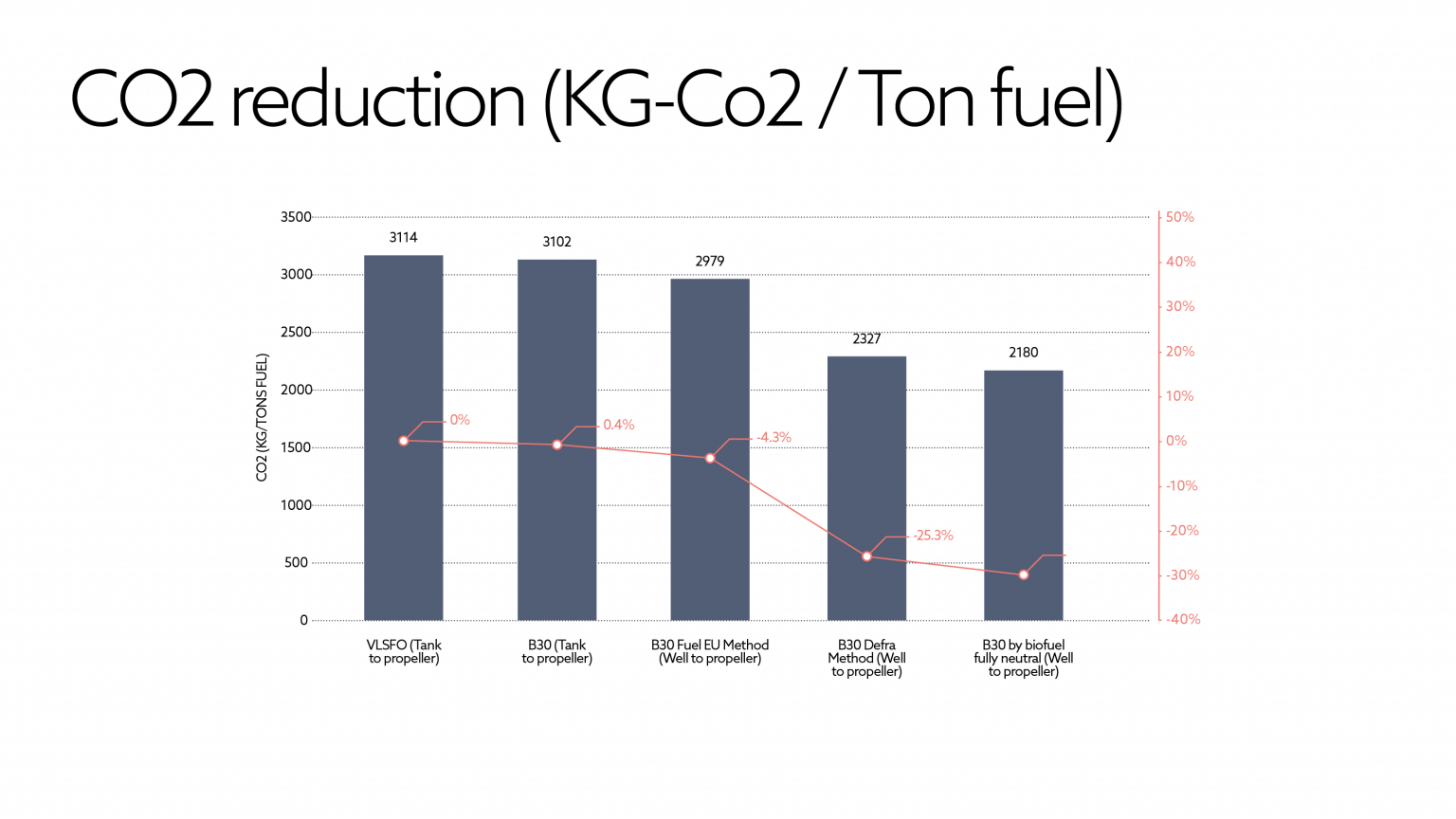 The C02 emissions in terms of per tonne of fuel shows a different level of reduction basis on the method applied: -0,4% (tank to propeller basis); -4,3% (well to propeller basis) applying the Fuel Eu regulation; -25,3% (well to propeller basis) applying the Defra method; -30% (well to propeller basis) considering the feedstock fully neutral;
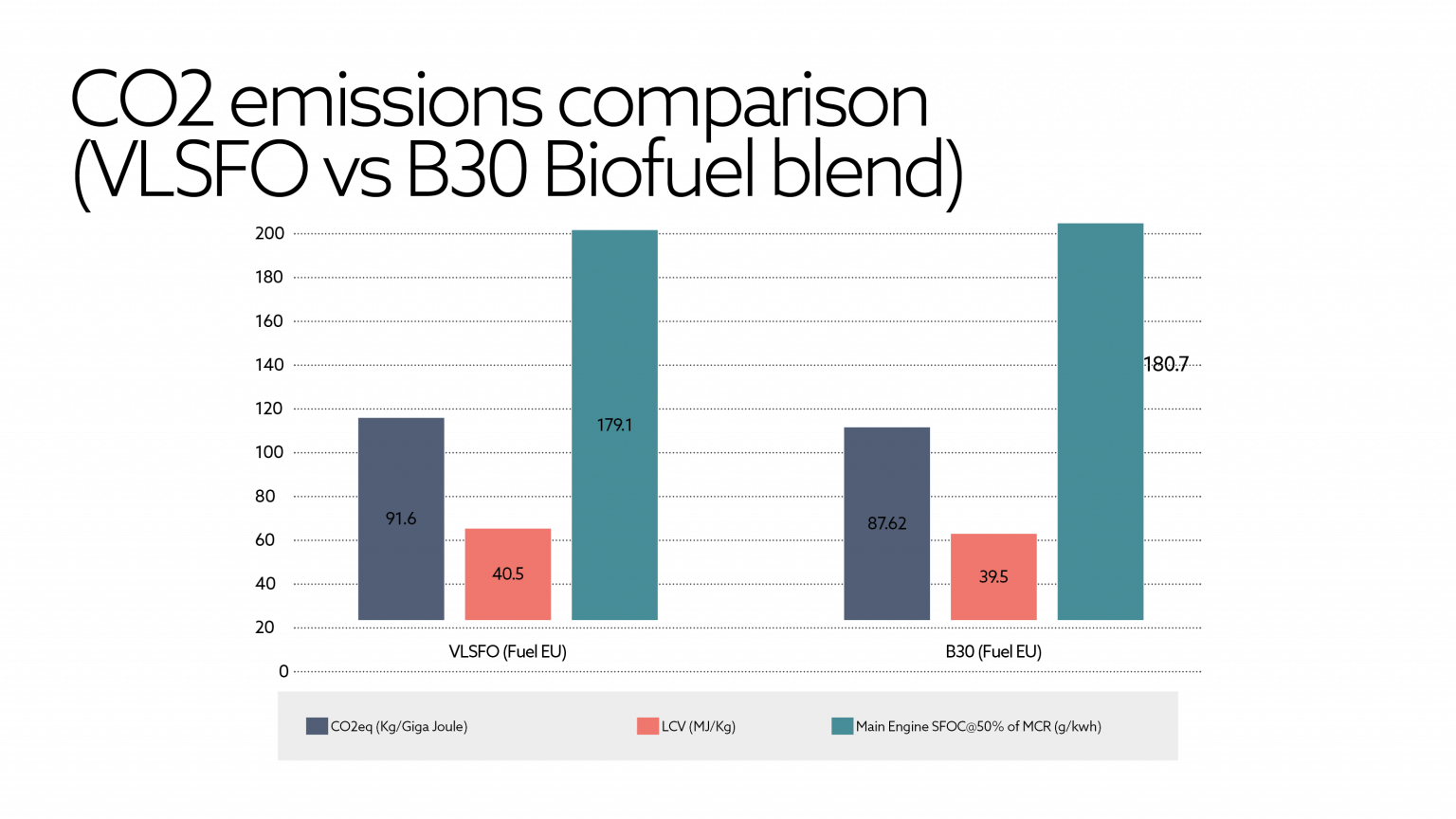 According the Fuel eu regulation, the C02eq emissions in terms of energy content (kg/Giga Joule) shows an improvement using the B30. The lower energy content of the B30 against the VLSFO was compensated by a very marginal increase in SFOC not as expected (only 1,6 g/kwh) resulting in an effective C02 reduction.
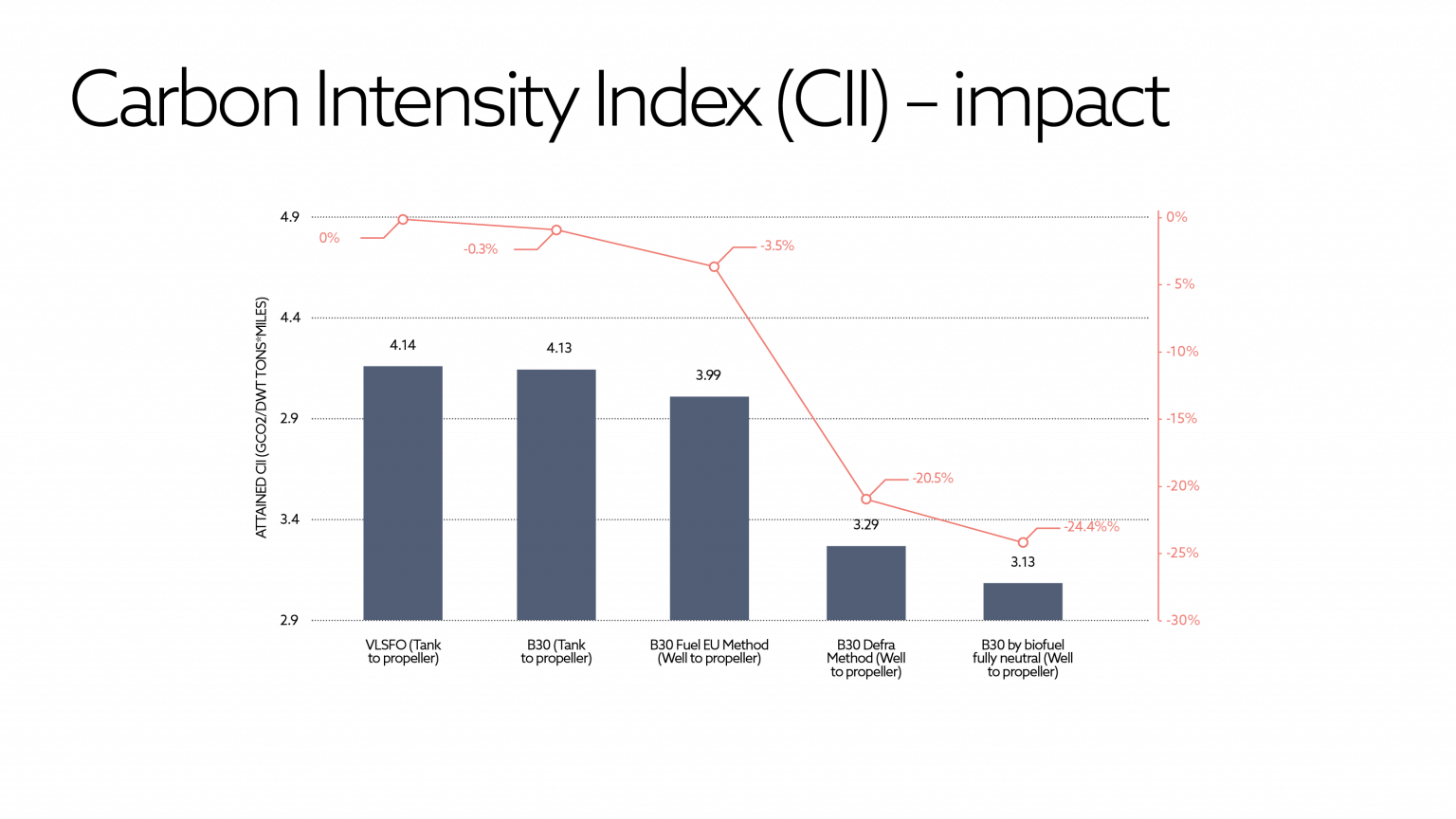 The Improvement effect on the CII was calculated using the DSC data provided for the 2020 and converting in Biofuel (B30) only the total consumption of VLSFO comsumed in 2020 (ie the ULSFO DM grade was not converted). The level of improvement depends by the methodology applied: -0,3% (tank to propeller basis); -3,5% (well to propeller basis) applying the Fuel Eu regulation; -20,5% (well to propeller basis) applying the Defra method; -24,4% (well to propeller basis) considering the feedstock fully neutral; *note: the calculation was done even if the WTW is not yet approved under the umbrella of IMO.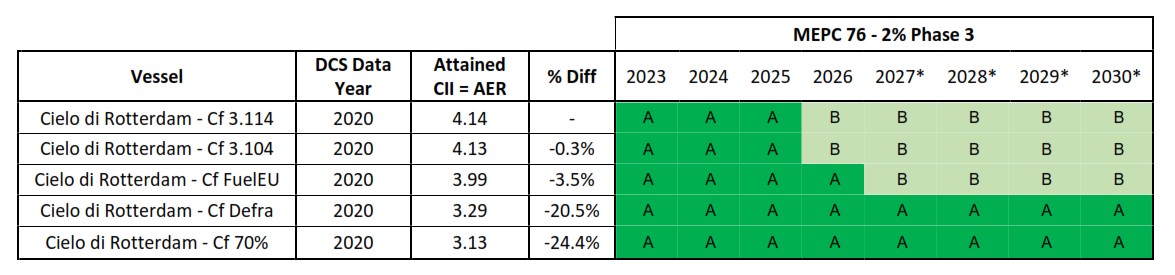
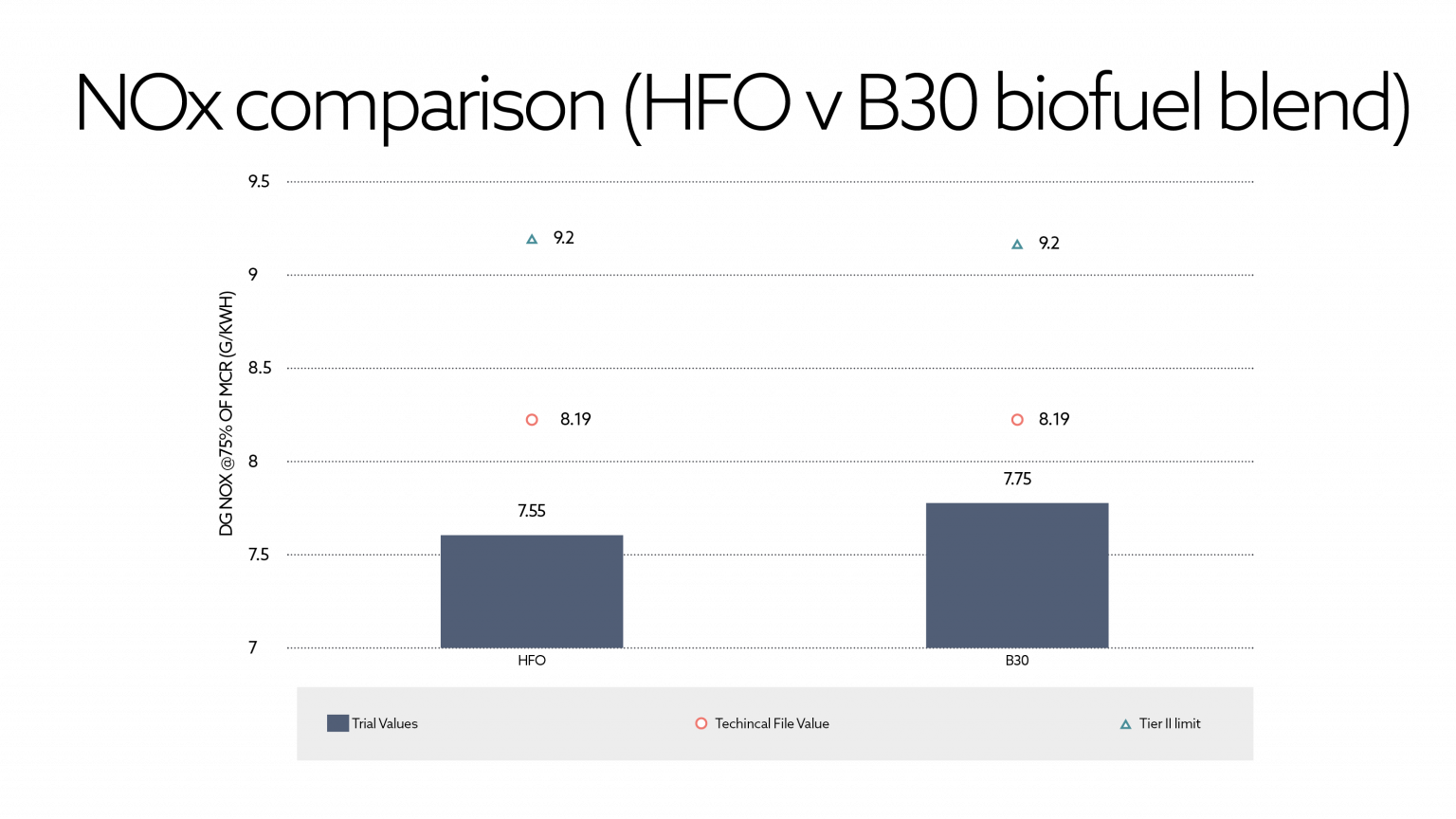 NOx emissions related to the use of B30 in the diesel generators (DG’s) are approximately 2.6% above those generated by using VLSFO, but remain well below the maximum allowable limit (9.2g/kwh) for Tier II compliance. (Parent engine test bed is included for comparative purposes).